Capstone Project
Designing for Inclusion
Enhancing Design Studio Classrooms for Diverse Cognitive and Learning Needs through Universal and Neuro-Inclusive Design
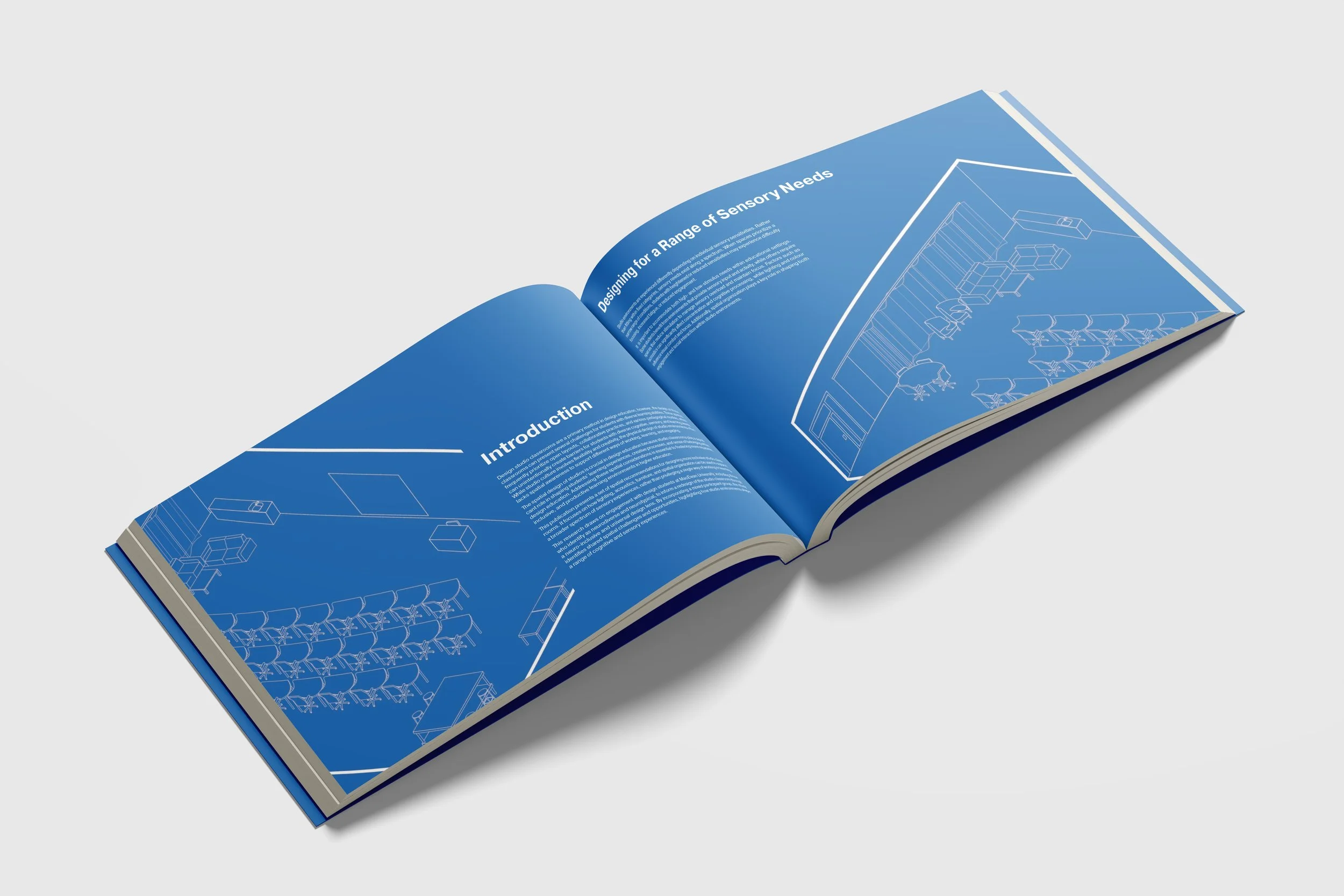
This project translates student-informed insights from MacEwan University into spatial design strategies that support a range of sensory experiences. The research methodology included surveys, design sprint activities and interviews with MacEwan Design Students. This project applies principles of universal and neuro-inclusive design to rethink how studio environments are organized and experience
Studio classrooms play a central role in shaping learning, creativity, and engagement in design education. However, open and flexible layouts often prioritize collaboration without considering diverse sensory and cognitive needs. As a result, students may experience difficulty focusing, sensory overload or under-stimulation, fatigue and reduced engagement
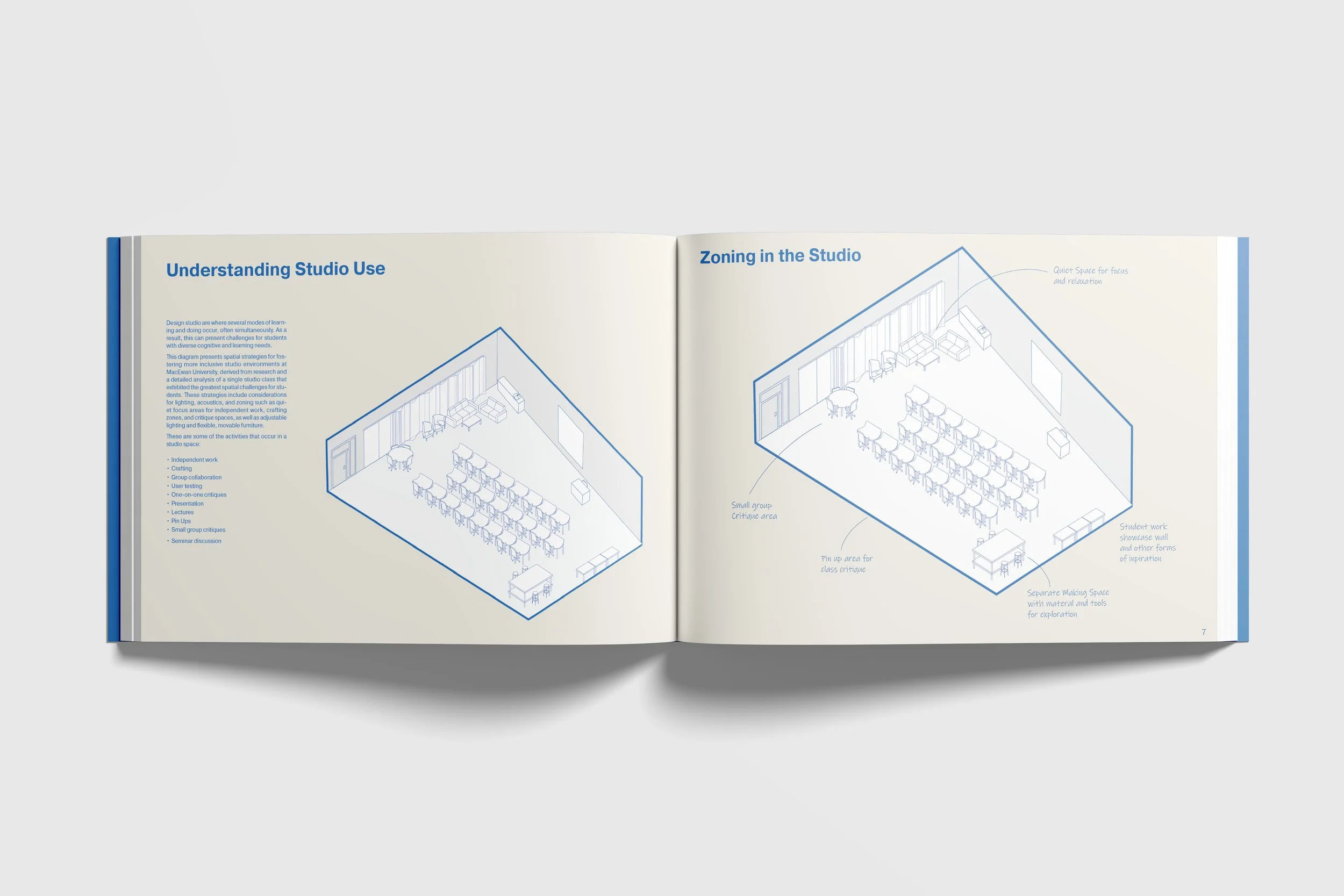
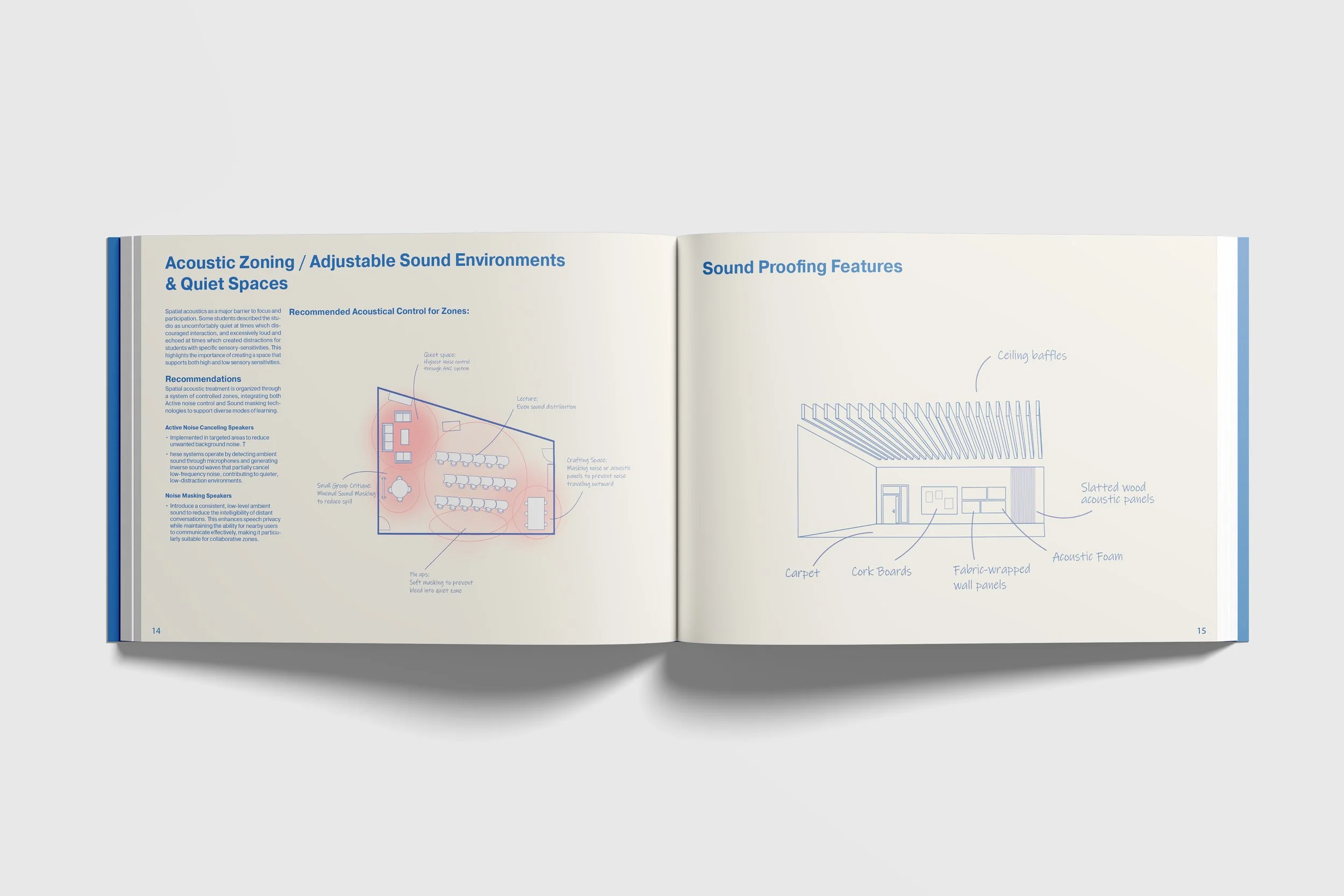
The redesign proposes the studios to be organized into distinct but connected zones that support different activities and sensory needs. This includes quiet areas for focused, independent work, collaborative zones for group interaction, and designated spaces for critiques and presentations.
Dedicated making area is proposed within the studios for material exploration to further support hands-on learning while helping to separate different modes of activity within the studio.
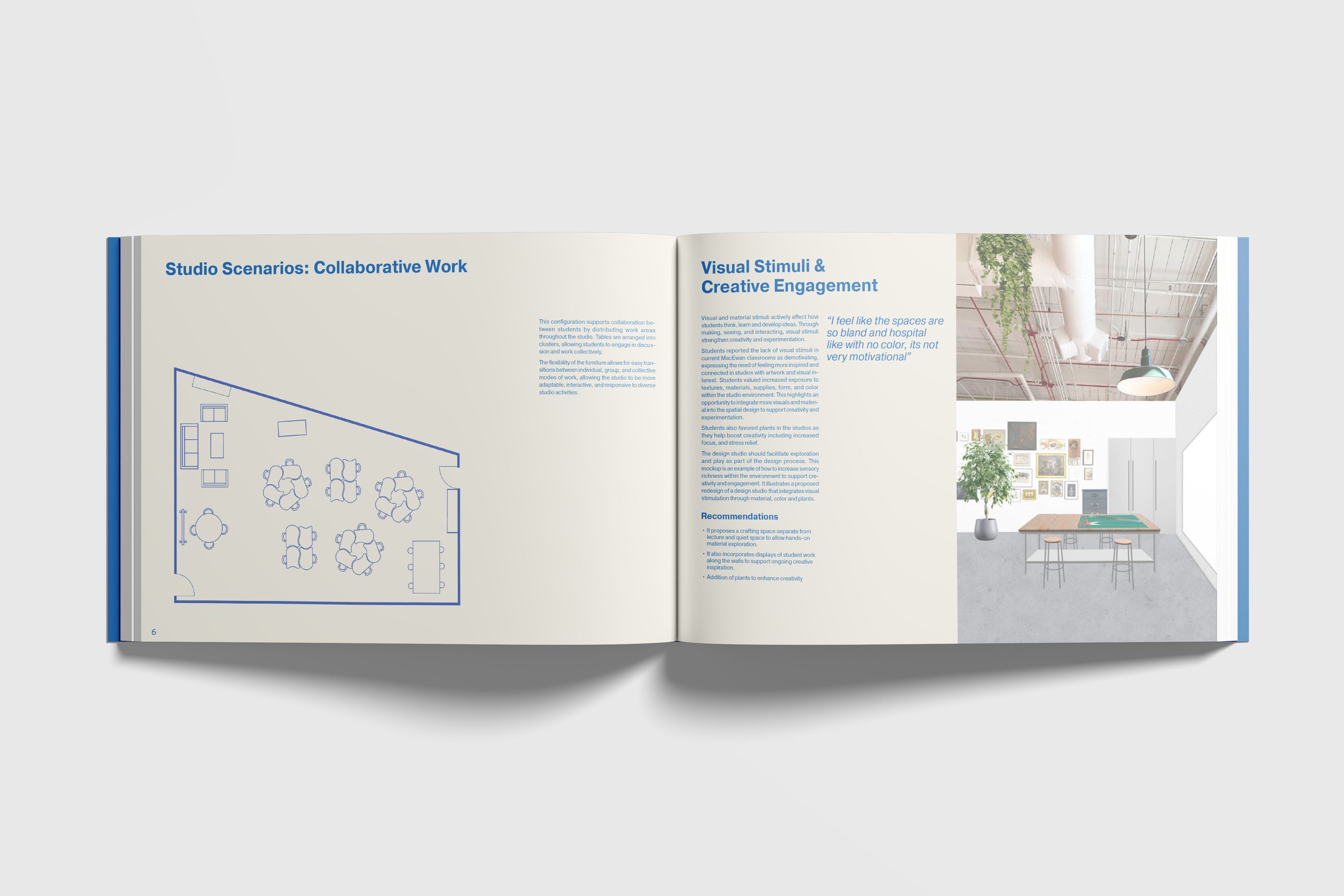
The publication proposes lighting and acoustics systems and shows diagrams that are coordinated to create a range of environmental conditions within the studio. Low-stimulation zones can incorporate reduced noise levels and softer lighting to support focus, while more active areas can accommodate higher light levels and collaborative energy. Gradients of sound and light across the space help support different modes of learning and allow users to select environments that suit their needs.
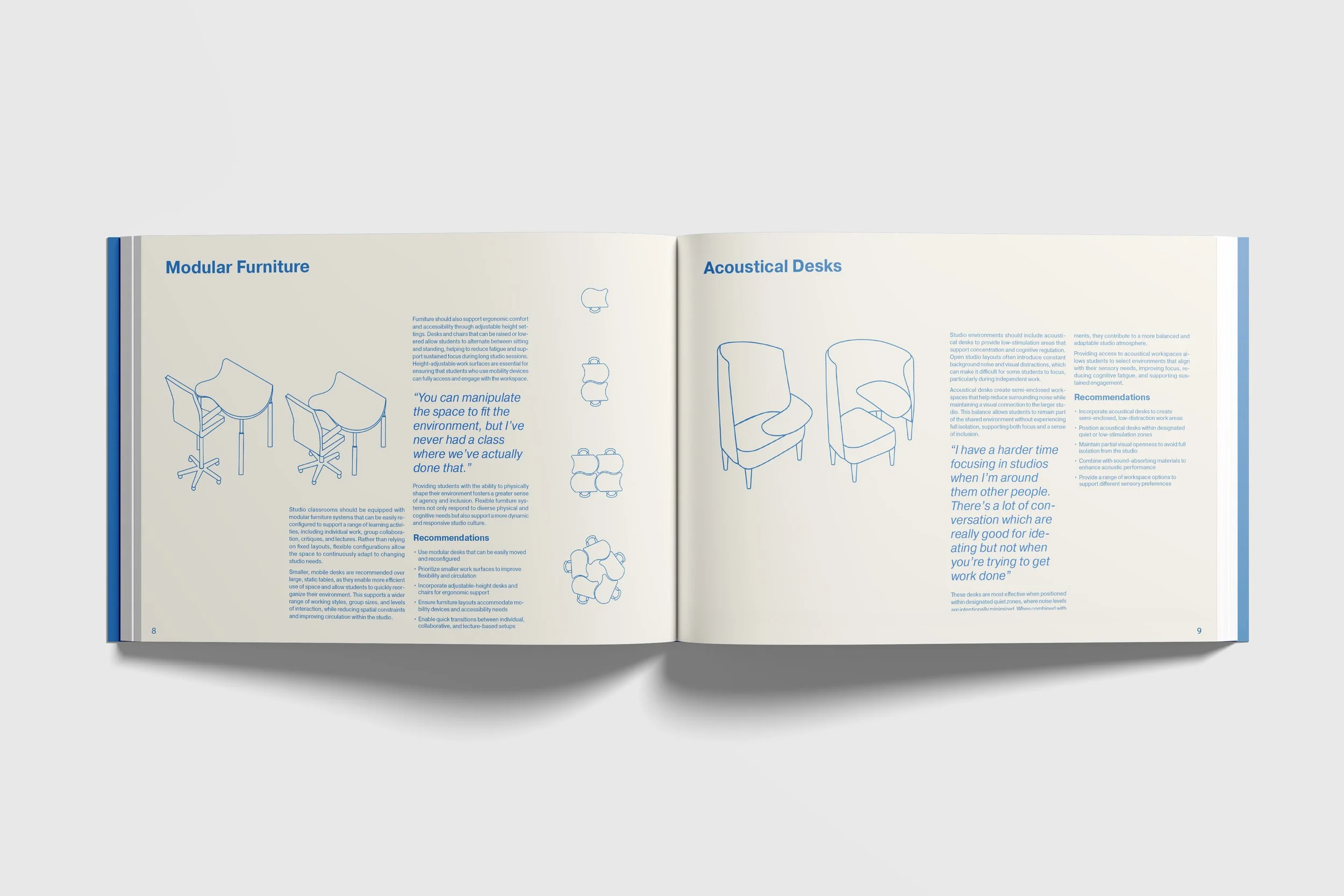
Flexible furniture systems are also shown to support the changing needs of studio activities. Reconfigurable desks allow for easy transitions between individual and group work, while smaller tables improve movement and adaptability within the space. Adjustable-height furniture enhances comfort and accessibility.